

The financial markets are experiencing a transformation unlike anything seen since the introduction of electronic trading. Artificial intelligence now processes millions of data points per second, identifies patterns invisible to human traders, and executes trades at speeds measured in milliseconds. This shift is not happening in some distant future—it is reshaping how individuals and institutions approach investing right now.
AI-powered trading platforms use machine learning algorithms to analyze market data and execute trades automatically, removing emotional bias from investment decisions. These systems operate continuously, adapting to market conditions in real-time while allowing users to maintain control over their capital and risk parameters.
For decades, institutional investors enjoyed exclusive access to sophisticated trading technology. Large banks and hedge funds employed teams of quantitative analysts, data scientists, and programmers to develop proprietary trading systems. The retail investor, by contrast, relied on delayed market information, basic charting tools, and manual execution. That gap is narrowing as fintech innovation brings institutional-grade capabilities to individual traders.
The Evolution of Automated Trading Systems
Automated trading is not a new concept. Simple rule-based systems have existed since the 1980s, executing trades when specific technical indicators triggered predefined conditions. These early systems followed rigid logic: if price crosses above a moving average, buy; if it crosses below, sell. While these tools reduced the need for constant market monitoring, they lacked adaptability.
Modern AI investing tools represent a fundamental advancement. Rather than following static rules, machine learning algorithms identify complex patterns across multiple data sources. They analyze price movements, volume trends, volatility indicators, correlation patterns, and market sentiment simultaneously. More importantly, these systems learn from outcomes, refining their approach as market conditions evolve.
The global currency market, where over $7 trillion changes hands daily, presents unique opportunities for algorithmic systems. Currency pairs trade 24 hours a day across different time zones, creating a continuous flow of data. Price movements respond to economic releases, central bank decisions, geopolitical events, and shifting risk sentiment. Processing this information stream exceeds human capacity, but falls within the capabilities of advanced AI systems.
Miami-based Korvato operates in this space with its Optimus AI trading engine. The system monitors forex markets continuously, analyzing real-time data to identify potential trading opportunities. Unlike traditional advisory services that provide recommendations, korvato trading technology executes trades automatically based on its analysis. Users set their risk parameters and capital allocation, while the system handles the technical execution.
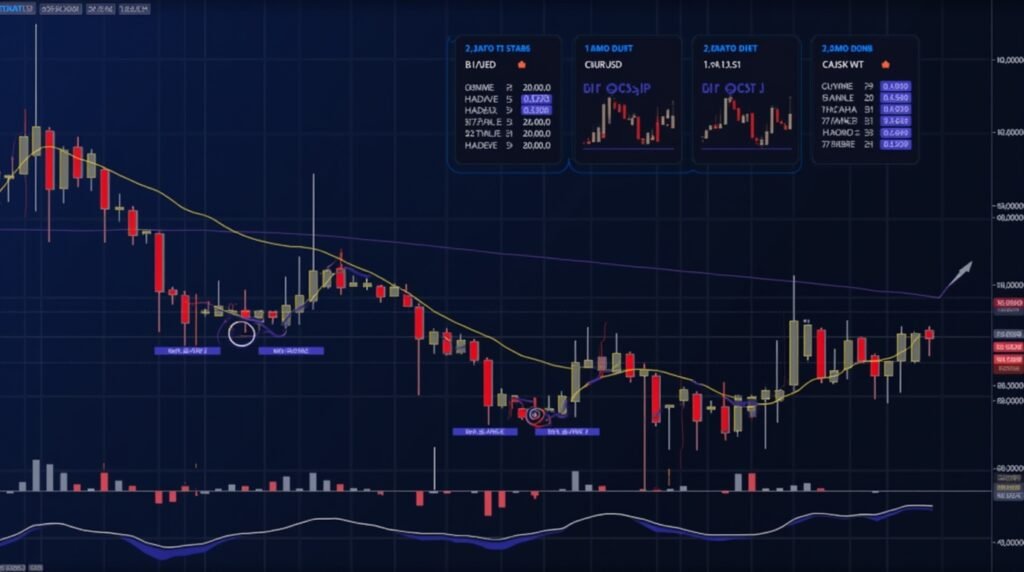
How AI Changes the Investment Decision Process
Human traders face inherent limitations. Emotional responses to losses often lead to poor timing decisions. Fear causes premature exits from winning positions. Overconfidence leads to excessive risk-taking after a series of gains. Fatigue degrades decision quality after hours of market monitoring. These psychological factors influence outcomes regardless of experience level.
Algorithmic systems operate without these constraints. An AI trading platform analyzes a potential trade using the same objective criteria whether markets are calm or volatile, whether previous trades were profitable or unprofitable. This consistency is particularly valuable during periods of market stress, when emotional decision-making tends to intensify.
The speed advantage also matters significantly. When economic data releases differ from expectations, currency prices adjust within seconds. An automated system can analyze the information, determine positioning, and execute trades before a human trader finishes reading the headline. In fast-moving markets, this speed differential directly impacts trade execution quality.
However, automation does not eliminate risk. Markets can move against any position regardless of the analysis supporting it. Unexpected events create conditions outside historical patterns that algorithms use for decision-making. Effective AI investing platforms incorporate risk management protocols—position sizing limits, maximum drawdown thresholds, and exposure controls—to protect capital during adverse conditions.
Next-Gen Wealth Management and Democratized Access
The traditional wealth management model created tiers of service based on account size. Clients with substantial assets received personalized attention from advisors, access to exclusive investment vehicles, and sophisticated portfolio management. Smaller accounts received standardized advice and limited options. This structure reflected the economics of human-delivered services.
Technology disrupts this model by dramatically reducing the marginal cost of providing sophisticated tools. Once developed, an AI trading system can serve one user or ten thousand users with minimal additional expense. This economic reality enables fintech companies to offer institutional-quality capabilities to retail traders who would never qualify for traditional private banking services.
The shift extends beyond simple cost reduction. Next-gen wealth management platforms provide transparency that traditional models often lacked. Users can monitor system performance in real-time, review trade history, and adjust parameters as their goals change. This level of control and visibility was previously unavailable to most individual investors.
Korvato’s approach exemplifies this democratization. The Optimus AI system applies the same analytical framework regardless of account size. A trader starting with a modest amount receives the same technology as someone managing a larger portfolio. The system’s 24/7 operation means it monitors markets continuously, eliminating the disadvantage individual traders face when institutional desks operate around the clock.
This accessibility does not diminish the importance of user responsibility. Individuals must still determine appropriate risk levels for their financial situation, understand that all trading involves potential losses, and recognize that past performance provides no guarantee of future results. Technology provides tools, but users make the fundamental decisions about capital allocation and risk tolerance.
The Intersection of Machine Learning and Market Analysis
Understanding how AI systems analyze markets helps clarify their role in modern investing. Machine learning algorithms identify relationships within data that may not be immediately obvious through traditional analysis. These systems can process variables simultaneously, detecting patterns that emerge from the interaction of multiple factors rather than single indicators.
In currency trading, exchange rates respond to interest rate differentials, economic growth trends, trade balances, political stability, and risk sentiment. These factors interact in complex ways. A strong employment report might typically strengthen a currency, but if inflation concerns dominate market sentiment, the same data could trigger selling. Context matters enormously.
AI systems excel at contextual analysis. By training on historical data across various market environments, algorithms learn to recognize which factors carry more weight under different conditions. They identify regime changes—shifts in market behavior patterns—and adjust their approach accordingly. This adaptability provides an edge in dynamic markets where relationships between variables evolve over time.
The technology also addresses a common challenge in technical analysis: overfitting. Traders sometimes identify patterns that worked historically but have no predictive power going forward—essentially finding noise rather than signal. Machine learning techniques include validation methods that test whether identified patterns hold up on data the system has not previously seen, reducing the risk of false pattern recognition.
Practical Considerations for Adopting AI Trading Tools
Investors considering automated trading platforms should evaluate several factors beyond marketing claims. Understanding the system’s approach, risk management framework, and operational transparency helps set realistic expectations.
Key evaluation criteria include:
- Account control: Users should maintain direct ownership of their trading accounts and capital. Quality platforms execute trades on behalf of users but do not take custody of funds.
- Risk parameters: Effective systems allow users to set maximum position sizes, stop-loss levels, and overall exposure limits aligned with their risk tolerance.
- Performance transparency: Detailed trade history and performance metrics should be readily accessible, allowing users to monitor system activity and results.
- Operational continuity: Automated systems should include redundancy and monitoring to maintain operation during technical issues.
- Regulatory compliance: Platforms should operate within applicable financial regulations and partner with regulated brokers.
The best AI trading bot implementations combine sophisticated analysis with robust risk controls. Speed and analytical power matter, but protecting capital during adverse market conditions determines long-term viability. Systems that prioritize risk management over maximizing returns during favorable conditions tend to deliver more consistent results across market cycles.
Users should also consider their own role in the process. While the system handles execution, individuals must still make decisions about initial capital allocation, ongoing funding, and when to adjust risk parameters. Successful adoption requires understanding both the technology’s capabilities and its limitations.
Looking Ahead: The Continuing Evolution
The integration of AI into investment management is still in relatively early stages. Current systems primarily focus on pattern recognition and execution efficiency. Future developments will likely expand into broader portfolio construction, cross-asset analysis, and more sophisticated risk modeling.
Natural language processing is already enabling systems to analyze news flow, central bank communications, and social media sentiment in real-time. As these capabilities mature, AI platforms will incorporate fundamental analysis alongside technical patterns, creating more comprehensive market views.
The regulatory environment will also evolve. Financial authorities worldwide are developing frameworks for algorithmic trading, addressing concerns about market stability, fairness, and systemic risk. Reputable fintech innovation companies work within these developing standards, contributing to responsible growth of automated trading.
Competition among platforms will likely drive continued improvement in both capability and accessibility. As more providers enter the market, differentiation will come from performance consistency, risk management quality, user experience, and transparency rather than simply claiming to use AI technology.
For individual investors, this evolution presents both opportunities and responsibilities. Access to sophisticated tools creates possibilities for more effective trading, but does not guarantee profits or eliminate risks. Markets remain inherently uncertain, and no technology can predict future price movements with certainty.
The Path Forward for Individual Investors
The automation of investment processes represents a significant shift in how individuals can participate in financial markets. Technology that once required massive infrastructure investments and specialized expertise is now accessible through platforms designed for retail traders. This democratization changes the competitive landscape, giving individuals tools to compete more effectively.
However, technology serves as an enabler, not a replacement for sound decision-making. Understanding your financial goals, risk capacity, and investment timeline remains essential. Automated systems execute strategies efficiently, but users must ensure those strategies align with their overall financial situation.
The currency markets that platforms like Korvato’s Optimus AI navigate will continue presenting both opportunities and risks. Economic cycles, policy changes, and unexpected events will create market volatility regardless of technological advances. Successful investing in this automated age still requires realistic expectations, appropriate risk management, and recognition that all trading involves the potential for losses.
For those who approach AI trading tools with clear understanding of both their capabilities and limitations, these platforms offer genuine advantages: continuous market monitoring, emotionless execution, institutional-speed response times, and sophisticated pattern recognition. These benefits make automation a meaningful development in personal finance, provided users maintain realistic expectations and proper risk controls.
The future of investing increasingly involves collaboration between human judgment and machine execution. Individuals set goals and define acceptable risks. AI systems handle the complex, time-intensive work of monitoring markets and executing strategies. This division of labor leverages the strengths of both human and artificial intelligence, creating an approach to markets that neither could achieve alone.
Trading Disclaimer:
This trading bot and any related content are provided for entertainment purposes only and do not constitute financial or investment advice. Trading involves significant risk and may lead to the loss of your funds. No profit or performance is guaranteed. Automated trading systems may be impacted by market volatility, software bugs, or technical disruptions. By using this system, you agree that you are solely responsible for all trading actions and outcomes. Always research carefully and trade at your own risk.